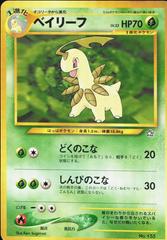
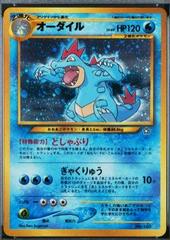
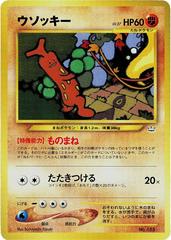
Japanese Neo Premium File — every card, ranked by upside
Every Japanese Neo Premium File card, all printing ranked together — 27 cards in total, priced raw and at PSA 7, 8, 9 and 10, and sorted by what a raw copy could be worth in a PSA 10 once you pay to grade it. The printing is named on every row, because on these sets it is most of what a card is worth. 0 carry a rank.
Prices: PriceCharting sold-comp data, November 5, 2026 — refreshed monthly. The cost basis includes $59.99 to grade (PSA Standard, the cheapest tier you can buy). Populations are PSA-graded copies only — CGC is excluded so every share has one denominator.
No cards match that search. Try a different name or number.
How to read this list — and why I built it this way
The ranking is by potential value — a card’s PSA 10 price minus what it costs to buy it raw and grade it. That is the size of the best-case prize, and it is deliberately simple. Set a price range and the list re-reads for your budget, so you are comparing the cards you could actually buy against each other instead of against the biggest card in the era.
Then read the odds. Every card shows its real chance of each grade, drawn from its own population rather than a rule of thumb, beside the profit at that grade. They will not sum to 100%: the rest of a card’s graded population sits at grade 6 or below, and that line is shown too, because a card that often lands there is a different proposition from one that does not. Read the two together — a large prize with poor odds is a lottery ticket, a smaller prize with good odds is a decision. Judging population and price side by side, on the cards your budget actually reaches, is how you work out what is worth chasing and what you want to collect.
ⓘ The method, stated plainly
Cost basis = raw NM price + $59.99 PSA fee. That is PSA's Standard tier, currently the lowest you can actually buy — the cheaper Value and Value Bulk tiers are paused as of September 2026. Shipping and insurance are excluded so the comparison stays consistent card to card; add your own for a specific copy. The ladder is PSA only: raw plus PSA 7, 8, 9 and 10. PSA does not issue half grades, so any 9.5 figure is BGS or CGC data and is left out. Population and grade odds are PSA population only — CGC copies are excluded, so every share on the page uses one denominator. Figures are occasionally rounded and may not total exactly.
Why potential value, and not a single blended return figure. A blended number hides both the size of the prize and the risk in it, so every card shows the odds of each grade right beside the profit at that grade, and you weigh the prize against the likelihood yourself. The population basis is PSA only for the same reason: one denominator, measured the same way on every card. CGC and BGS figures are real, but mixing three grading companies into one share makes the odds mean less. Shipping and insurance are excluded from the cost basis on purpose — they vary by where you live and how many cards you send, and consistency matters more here than completeness.
There is one catch, and it is the whole game: condition. To use this list well you have to be able to look at a raw card and estimate, roughly, what it would grade — and understand why graders penalize what they penalize. A card bought at a PSA 9 price in PSA 6 condition is a loss no matter how good its rank looks here. If that skill is new to you, the grading ROI guide covers the cost math and the pre-screen check; a dedicated condition guide is coming.
This is my perspective as a collector, not a promise of returns. Every figure on the page is a decision input, not a forecast.
🔍 Pre-screen before you submit
Affiliate disclosure: this link is a referral — if you sign up or buy through it we may earn a commission at no extra cost to you. It does not affect what we recommend.
Before you spend $59.99, spend nothing. Check recent sold comps for the card's graded prices on 130point, and pre-screen the condition. A tool like CardGrader AI can flag the defects graders penalize — a free second opinion before a $60 decision. (That's an affiliate link: it costs you nothing and keeps the lights on here.) The full grading ROI guide covers the all-in cost math and the 3× buffer test.