Base Set 1st Edition — every card, ranked by upside
All 105 cards of Base Set 1st Edition, priced raw and at every grade and ranked by what a raw copy could be worth in a PSA 10 once you pay to grade it. 104 carry a rank; the others are listed with whatever is missing stated on the row.
Prices: PriceCharting sold-comp data, October 12, 2026 — refreshed monthly. The cost basis includes $59.99 to grade (PSA Standard, the cheapest tier you can buy). Populations are PSA-graded copies only — CGC is excluded so every share has one denominator.
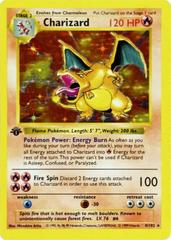
$9,555.50 raw → $334,575.36 PSA 10+$324,960 potential
Raw NM
$9,555.50
your cost basis
PSA 7
$21,259.50
PSA 8
$28,100.00
PSA 9
$30,910.00
PSA 10
$334,575.36
Potential value — PSA 10 price minus your cost
+$324,960
This is what sets the ranking.
What each grade pays, and how often it happens
PSA 7
11.4%of graded copies
+$11,644profit
PSA 8
13.3%of graded copies
+$18,485profit
PSA 9
13.5%of graded copies
+$21,295profit
PSA 10
2.3%of graded copies
+$324,960profit
PSA 6 or below
59.5%of graded copies
worth less than raw NM
The distribution — share of all PSA-graded copies
≤6
7
8
9
The card every other vintage card is priced against, and the flagship of the oldest English set. It holds the biggest prize on this list by an enormous margin — roughly $325,593 above what it costs to buy raw and grade. The catch is the odds: only about 41.7% of graded Charizards reach a PSA 7 or better, and more than a quarter come back a grade 6 or below. If you grade one, expect an 8 or 9 — the PSA 10 is only a 2.4% outcome.
$400.00 raw → $102,500.00 PSA 10+$102,040 potential
Raw NM
$400.00
your cost basis
PSA 7
$810.00
PSA 8
$1,599.50
PSA 9
$4,100.00
PSA 10
$102,500.00
Potential value — PSA 10 price minus your cost
+$102,040
This is what sets the ranking.
What each grade pays, and how often it happens
PSA 7
14.9%of graded copies
+$350profit
PSA 8
19.9%of graded copies
+$1,140profit
PSA 9
17.1%of graded copies
+$3,640profit
PSA 10
1.8%of graded copies
+$102,040profit
PSA 6 or below
46.4%of graded copies
worth less than raw NM
The distribution — share of all PSA-graded copies
≤6
7
8
9
The second-biggest prize in the set, and the biggest surprise. A raw copy at about $400 sits under a PSA 10 worth roughly $102,500, a prize of some $102,040 on a very small outlay. But read the odds before you believe it: only about 68 PSA 10s exist in 3,143 graded copies, and 34% come back a grade 6 or below. The prize is real. The chance of collecting it is about one in forty-six.
The anime's antagonist and one of the most recognised characters in the franchise. Its prize is about $53,481, and the odds behind it are among the kinder ones here: roughly 57.9% of graded copies reach a PSA 7 or better. A raw entry near $528 keeps the cost side low, which is what turns a $54,070 PSA 10 from a number into a plausible target.
Raw copies cost $463.38 and a PSA 10 has sold for $37,934.00 — +$37,411 over the cost of buying one raw and grading it. A PSA 7 already clears the fee (+$382), so the downside is limited to what the raw copy cost. 75.3% of graded copies reach a PSA 7 or better and 7.3% come back a 10. PSA has recorded 3,584 copies of this printing.
$1,365.16 raw → $37,333.56 PSA 10+$35,908 potential
Raw NM
$1,365.16
your cost basis
PSA 7
$3,968.05
PSA 8
$5,043.39
PSA 9
$6,720.00
PSA 10
$37,333.56
Potential value — PSA 10 price minus your cost
+$35,908
This is what sets the ranking.
What each grade pays, and how often it happens
PSA 7
13.3%of graded copies
+$2,543profit
PSA 8
16.3%of graded copies
+$3,618profit
PSA 9
18.4%of graded copies
+$5,295profit
PSA 10
2.6%of graded copies
+$35,908profit
PSA 6 or below
49.4%of graded copies
worth less than raw NM
The distribution — share of all PSA-graded copies
≤6
7
8
9
The second starter and the set's other heavyweight, with the second-largest PSA 10 price in the set at roughly $70,729. Its odds are the steadier story: about 50.6% of graded copies reach a PSA 7 or better, and its grade spread sits higher up the range than Chansey's. A prize of about $69,384 on a $1,285 entry — a big number with better-than-average odds of landing somewhere useful.
$1,050.00 raw → $36,491.92 PSA 10+$35,382 potential
Raw NM
$1,050.00
your cost basis
PSA 7
$2,500.00
PSA 8
$4,199.00
PSA 9
$5,877.29
PSA 10
$36,491.92
Potential value — PSA 10 price minus your cost
+$35,382
This is what sets the ranking.
What each grade pays, and how often it happens
PSA 7
13.0%of graded copies
+$1,390profit
PSA 8
16.7%of graded copies
+$3,089profit
PSA 9
20.4%of graded copies
+$4,767profit
PSA 10
4.1%of graded copies
+$35,382profit
PSA 6 or below
45.7%of graded copies
worth less than raw NM
The distribution — share of all PSA-graded copies
≤6
7
8
9
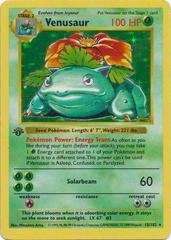
The third starter, and quietly the most gem-friendly of the three. Venusaur has produced about 172 PSA 10s from 4,009 graded copies — more PSA 10s in absolute terms than either Blastoise or Charizard, off a smaller population. Its prize of roughly $36,002 is smaller than Blastoise's for that reason, but if you are choosing which starter to submit, the odds separate them and Venusaur's are the best.
A fan-favourite fire-type whose prize sits above several more famous cards, at roughly $21,731. Roughly 2,562 graded copies — one of the thinner populations here — and a 61.7% chance of a PSA 7 or better, which is among the better spreads in the set. A useful reminder that perceived popularity and graded demand do not always move together.
One of the two most forgiving cards to grade in the entire set. About 63.8% of graded Poliwraths reach a PSA 7 or better, and 4.4% come back a PSA 10 — nearly nine times Machamp's rate. The prize is small at roughly $12,239, so it will never top a value ranking, but a high hit-rate on a $359 entry is a different kind of opportunity than a lottery ticket.
One of the set's two fighting-types and the sharper edge of the pair. A gem rate of about 2.7% is low — level with Charizard's — and only 57.5% of graded copies reach a PSA 7 or better, with a third coming back a grade 6 or below. The $288 raw price is among the cheapest entries here, so a cheap entry softens the risk, but the odds say expect a mid grade.
The first card in the set by number, and a genuine hobby landmark for that alone. Drawn by Sugimori with 2,887 graded copies and a 54.6% chance of a PSA 7 or better, on a $597 raw entry against a prize of about $16,775. Note the shape: this card is more likely to grade a 9 (19.0%) than a 7 (14.1%), which is a healthier spread than most here.
An anime monster with a devoted following and no starter premium, which makes it one of the more interesting cards in the middle of the table. Drawn by Arita, with about 2,860 graded copies and a 59.7% chance of a PSA 7 or better. The prize is a fraction of the starters' at roughly $25,766 — but the odds of landing a decent grade are meaningfully better, and the raw entry is only about $416.
The only holo in Base Set not drawn by Sugimori or Arita — Keiji Kinebuchi's work, and the reason it has a following among art-focused collectors. About 64.7% of graded copies reach a PSA 7 or better, the best odds in the set, on the second-cheapest raw entry at roughly $214. The prize is a middle-weight $9,993, but the reliability is the best available here.
Wartortle clears the fee at every grade. A PSA 10 is worth $9,157 against a $75 raw, and 77.4% of PSA-graded copies reach a PSA 7 or better — so the submission pays even when the grade disappoints.
A classic Sugimori holo sitting mid-table on a $465 raw price, with a 62.5% chance of a PSA 7 or better — better odds than several cards ranked above it. Its prize is modest at roughly $13,897, but a $146 profit at a PSA 7 means the downside is thin. That is the honest profile of most non-starter holos in this set: a small prize that is relatively likely to materialise.
A Sugimori holo with one of the lower raw prices here at roughly $255. The prize is short — its PSA 10 tops out near $9,126 — but the odds are one of the friendliest in the set at about 62.6% reaching a PSA 7 or better. Clefairy is the clearest example of a card whose value comes from reliability rather than headline numbers.
Pikachu's evolution carries the recognition without the print volume, and that asymmetry is the story. Around $334 raw against a prize of about $20,346, with a 57.3% chance of reaching a PSA 7 or better. For a collector who wants a headline Pokémon without paying the starter price, this is the shape of card to look for: a real prize with odds that hold up.
The most forgiving card on the list. About 5.0% of graded Zapdos copies come back a PSA 10 — the highest gem rate here by a wide margin — and roughly 58.6% reach a PSA 7 or better. It is the direct counter-example to the trap at the bottom of this guide: a modest prize of about $8,623, but a card that hits a gem roughly one time in twenty rather than one time in two hundred.
Bulbasaur clears the fee at every grade. A PSA 10 is worth $6,453 against a $210 raw, and 78.9% of PSA-graded copies reach a PSA 7 or better — so the submission pays even when the grade disappoints.
Pikachu clears the fee at every grade. A PSA 10 is worth $5,601 against a $190 raw, and 78.3% of PSA-graded copies reach a PSA 7 or better — so the submission pays even when the grade disappoints.
The cautionary tale of this guide, and the reason it is not simply ‘big number wins.’ Machamp is the most heavily graded card here by a wide margin — 7,404 copies — and only 48 came back PSA 10. That is a gem rate of about 0.2%, roughly one in two hundred. Worse, more than a third of all graded copies come back a grade 6 or below, and only 34.2% reach a PSA 7 or better. Its profit at a PSA 7 is exactly $0 — so the $4,576 prize is a number you will almost certainly never see.
Dragonair clears the fee at every grade. A PSA 10 is worth $5,000 against a $136 raw, and 79.6% of PSA-graded copies reach a PSA 7 or better — so the submission pays even when the grade disappoints.
Lass turns profitable at a PSA 8. A PSA 7 comes back at a loss, the $3,896 PSA 10 rests on a 11.6% gem rate, and 11.9% of PSA-graded copies land at grade 6 or below — the money sits in the middle of the ladder.
Kadabra turns profitable at a PSA 8. A PSA 7 comes back at a loss, the $3,525 PSA 10 rests on a 12.0% gem rate, and 14.5% of PSA-graded copies land at grade 6 or below — the money sits in the middle of the ladder.
Beedrill clears the fee at every grade. A PSA 10 is worth $3,384 against a $128 raw, and 82.1% of PSA-graded copies reach a PSA 7 or better — so the submission pays even when the grade disappoints.
Squirtle turns profitable at a PSA 8. A PSA 7 comes back at a loss, the $2,751 PSA 10 rests on a 15.0% gem rate, and 18.0% of PSA-graded copies land at grade 6 or below — the money sits in the middle of the ladder.
Magikarp turns profitable at a PSA 8. A PSA 7 comes back at a loss, the $3,225 PSA 10 rests on a 13.9% gem rate, and 12.9% of PSA-graded copies land at grade 6 or below — the money sits in the middle of the ladder.
Growlithe only pays at a PSA 9 or better. Both a PSA 7 and a PSA 8 lose money, and the $3,109 top prize depends on a 10.9% gem rate — one to send only if you are confident of the grade.
Charmeleon turns profitable at a PSA 8. A PSA 7 comes back at a loss, the $2,661 PSA 10 rests on a 11.1% gem rate, and 18.3% of PSA-graded copies land at grade 6 or below — the money sits in the middle of the ladder.
Charmander turns profitable at a PSA 8. A PSA 7 comes back at a loss, the $3,039 PSA 10 rests on a 15.5% gem rate, and 16.4% of PSA-graded copies land at grade 6 or below — the money sits in the middle of the ladder.
Electabuzz turns profitable at a PSA 8. A PSA 7 comes back at a loss, the $2,141 PSA 10 rests on a 14.3% gem rate, and 16.1% of PSA-graded copies land at grade 6 or below — the money sits in the middle of the ladder.
Dratini turns profitable at a PSA 8. A PSA 7 comes back at a loss, the $2,550 PSA 10 rests on a 10.4% gem rate, and 12.9% of PSA-graded copies land at grade 6 or below — the money sits in the middle of the ladder.
Arcanine clears the fee at every grade. A PSA 10 is worth $2,500 against a $99 raw, and 82.4% of PSA-graded copies reach a PSA 7 or better — so the submission pays even when the grade disappoints.
Ivysaur turns profitable at a PSA 8. A PSA 7 comes back at a loss, the $2,375 PSA 10 rests on a 12.9% gem rate, and 19.1% of PSA-graded copies land at grade 6 or below — the money sits in the middle of the ladder.
Dugtrio only pays at a PSA 9 or better. Both a PSA 7 and a PSA 8 lose money, and the $1,950 top prize depends on a 12.1% gem rate — one to send only if you are confident of the grade.
Pidgeotto turns profitable at a PSA 8. A PSA 7 comes back at a loss, the $1,575 PSA 10 rests on a 14.6% gem rate, and 15.4% of PSA-graded copies land at grade 6 or below — the money sits in the middle of the ladder.
Item Finder turns profitable at a PSA 8. A PSA 7 comes back at a loss, the $1,152 PSA 10 rests on a 12.1% gem rate, and 11.2% of PSA-graded copies land at grade 6 or below — the money sits in the middle of the ladder.
Electrode turns profitable at a PSA 8. A PSA 7 comes back at a loss, the $1,608 PSA 10 rests on a 13.9% gem rate, and 13.8% of PSA-graded copies land at grade 6 or below — the money sits in the middle of the ladder.
Professor Oak only pays at a PSA 9 or better. Both a PSA 7 and a PSA 8 lose money, and the $1,613 top prize depends on a 14.8% gem rate — one to send only if you are confident of the grade.
Porygon only pays at a PSA 9 or better. Both a PSA 7 and a PSA 8 lose money, and the $1,599 top prize depends on a 14.6% gem rate — one to send only if you are confident of the grade.
Haunter only pays at a PSA 9 or better. Both a PSA 7 and a PSA 8 lose money, and the $1,499 top prize depends on a 12.3% gem rate — one to send only if you are confident of the grade.
Super Energy Removal only pays at a PSA 9 or better. Both a PSA 7 and a PSA 8 lose money, and the $1,750 top prize depends on a 15.2% gem rate — one to send only if you are confident of the grade.
Jynx only pays at a PSA 9 or better. Both a PSA 7 and a PSA 8 lose money, and the $1,293 top prize depends on a 15.9% gem rate — one to send only if you are confident of the grade.
Clefairy Doll only pays at a PSA 9 or better. Both a PSA 7 and a PSA 8 lose money, and the $1,252 top prize depends on a 12.6% gem rate — one to send only if you are confident of the grade.
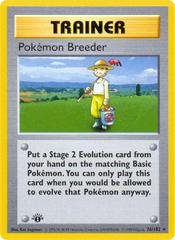
Pokémon Breeder turns profitable at a PSA 8. A PSA 7 comes back at a loss, the $1,216 PSA 10 rests on a 15.8% gem rate, and 9.6% of PSA-graded copies land at grade 6 or below — the money sits in the middle of the ladder.
Poliwhirl only pays at a PSA 9 or better. Both a PSA 7 and a PSA 8 lose money, and the $1,108 top prize depends on a 16.0% gem rate — one to send only if you are confident of the grade.
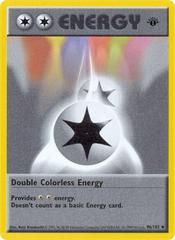
Double Colorless Energy only pays at a PSA 9 or better. Both a PSA 7 and a PSA 8 lose money, and the $1,584 top prize depends on a 13.8% gem rate — one to send only if you are confident of the grade.
Machoke only pays at a PSA 9 or better. Both a PSA 7 and a PSA 8 lose money, and the $1,190 top prize depends on a 16.9% gem rate — one to send only if you are confident of the grade.
Devolution Spray only pays at a PSA 9 or better. Both a PSA 7 and a PSA 8 lose money, and the $1,147 top prize depends on a 10.7% gem rate — one to send only if you are confident of the grade.
Caterpie turns profitable at a PSA 8. A PSA 7 comes back at a loss, the $1,039 PSA 10 rests on a 19.2% gem rate, and 9.8% of PSA-graded copies land at grade 6 or below — the money sits in the middle of the ladder.
Farfetch'd only pays at a PSA 9 or better. Both a PSA 7 and a PSA 8 lose money, and the $1,138 top prize depends on a 18.8% gem rate — one to send only if you are confident of the grade.
Magmar only pays at a PSA 9 or better. Both a PSA 7 and a PSA 8 lose money, and the $1,016 top prize depends on a 15.6% gem rate — one to send only if you are confident of the grade.
Pokémon Trader only pays at a PSA 9 or better. Both a PSA 7 and a PSA 8 lose money, and the $1,127 top prize depends on a 14.3% gem rate — one to send only if you are confident of the grade.
PriceCharting records no PSA-graded copies of this printing
odds unavailable
The distribution
no census
Raw copies cost $50.00 and a PSA 10 has sold for $943.75 — +$834 over the cost of buying one raw and grading it. The 9 clears the fee (+$66) but the 8 does not. PriceCharting records no PSA census for this printing, so there are no odds to quote — the figure above comes from its sold-comp data alone.
Energy Removal only pays at a PSA 9 or better. Both a PSA 7 and a PSA 8 lose money, and the $700 top prize depends on a 17.1% gem rate — one to send only if you are confident of the grade.
Scoop Up only pays at a PSA 9 or better. Both a PSA 7 and a PSA 8 lose money, and the $850 top prize depends on a 17.6% gem rate — one to send only if you are confident of the grade.
Dewgong only pays at a PSA 9 or better. Both a PSA 7 and a PSA 8 lose money, and the $829 top prize depends on a 14.7% gem rate — one to send only if you are confident of the grade.
Onix only pays at a PSA 9 or better. Both a PSA 7 and a PSA 8 lose money, and the $814 top prize depends on a 21.1% gem rate — one to send only if you are confident of the grade.
Pokédex only pays at a PSA 9 or better. Both a PSA 7 and a PSA 8 lose money, and the $795 top prize depends on a 18.6% gem rate — one to send only if you are confident of the grade.
Vulpix only pays at a PSA 9 or better. Both a PSA 7 and a PSA 8 lose money, and the $799 top prize depends on a 22.8% gem rate — one to send only if you are confident of the grade.
Gastly only pays at a PSA 9 or better. Both a PSA 7 and a PSA 8 lose money, and the $754 top prize depends on a 23.5% gem rate — one to send only if you are confident of the grade.
Starmie only pays at a PSA 9 or better. Both a PSA 7 and a PSA 8 lose money, and the $781 top prize depends on a 25.6% gem rate — one to send only if you are confident of the grade.
Pidgey only pays at a PSA 9 or better. Both a PSA 7 and a PSA 8 lose money, and the $705 top prize depends on a 27.3% gem rate — one to send only if you are confident of the grade.
Pokémon Flute only pays at a PSA 9 or better. Both a PSA 7 and a PSA 8 lose money, and the $830 top prize depends on a 13.3% gem rate — one to send only if you are confident of the grade.
Computer Search turns profitable at a PSA 8. A PSA 7 comes back at a loss, the $806 PSA 10 rests on a 17.8% gem rate, and 10.2% of PSA-graded copies land at grade 6 or below — the money sits in the middle of the ladder.
Abra only pays at a PSA 9 or better. Both a PSA 7 and a PSA 8 lose money, and the $735 top prize depends on a 27.8% gem rate — one to send only if you are confident of the grade.
PlusPower only pays at a PSA 9 or better. Both a PSA 7 and a PSA 8 lose money, and the $655 top prize depends on a 17.1% gem rate — one to send only if you are confident of the grade.
Koffing only pays at a PSA 9 or better. Both a PSA 7 and a PSA 8 lose money, and the $621 top prize depends on a 23.3% gem rate — one to send only if you are confident of the grade.
Kakuna only pays at a PSA 9 or better. Both a PSA 7 and a PSA 8 lose money, and the $688 top prize depends on a 15.6% gem rate — one to send only if you are confident of the grade.
Nidorino only pays at a PSA 9 or better. Both a PSA 7 and a PSA 8 lose money, and the $659 top prize depends on a 17.2% gem rate — one to send only if you are confident of the grade.
Poliwag only pays at a PSA 9 or better. Both a PSA 7 and a PSA 8 lose money, and the $559 top prize depends on a 30.1% gem rate — one to send only if you are confident of the grade.
Weedle only pays at a PSA 9 or better. Both a PSA 7 and a PSA 8 lose money, and the $670 top prize depends on a 25.4% gem rate — one to send only if you are confident of the grade.
Ponyta only pays at a PSA 9 or better. Both a PSA 7 and a PSA 8 lose money, and the $619 top prize depends on a 27.9% gem rate — one to send only if you are confident of the grade.
Seel only pays at a PSA 9 or better. Both a PSA 7 and a PSA 8 lose money, and the $665 top prize depends on a 16.4% gem rate — one to send only if you are confident of the grade.
Doduo only pays at a PSA 9 or better. Both a PSA 7 and a PSA 8 lose money, and the $578 top prize depends on a 19.6% gem rate — one to send only if you are confident of the grade.
Drowzee only pays at a PSA 9 or better. Both a PSA 7 and a PSA 8 lose money, and the $600 top prize depends on a 24.9% gem rate — one to send only if you are confident of the grade.
Super Potion only pays at a PSA 9 or better. Both a PSA 7 and a PSA 8 lose money, and the $568 top prize depends on a 17.4% gem rate — one to send only if you are confident of the grade.
Full Heal only pays at a PSA 9 or better. Both a PSA 7 and a PSA 8 lose money, and the $567 top prize depends on a 13.8% gem rate — one to send only if you are confident of the grade.
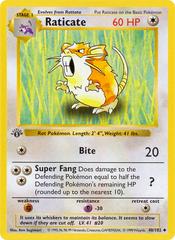
Raticate only pays at a PSA 9 or better. Both a PSA 7 and a PSA 8 lose money, and the $586 top prize depends on a 17.5% gem rate — one to send only if you are confident of the grade.
Nidoran ♂ only pays at a PSA 9 or better. Both a PSA 7 and a PSA 8 lose money, and the $520 top prize depends on a 27.8% gem rate — one to send only if you are confident of the grade.
Pokémon Center only pays at a PSA 9 or better. Both a PSA 7 and a PSA 8 lose money, and the $430 top prize depends on a 21.3% gem rate — one to send only if you are confident of the grade.
Metapod only pays at a PSA 9 or better. Both a PSA 7 and a PSA 8 lose money, and the $510 top prize depends on a 26.2% gem rate — one to send only if you are confident of the grade.
Defender only pays at a PSA 9 or better. Both a PSA 7 and a PSA 8 lose money, and the $593 top prize depends on a 14.2% gem rate — one to send only if you are confident of the grade.
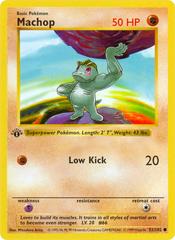
Machop only pays at a PSA 9 or better. Both a PSA 7 and a PSA 8 lose money, and the $508 top prize depends on a 26.2% gem rate — one to send only if you are confident of the grade.
Diglett only pays at a PSA 9 or better. Both a PSA 7 and a PSA 8 lose money, and the $483 top prize depends on a 26.3% gem rate — one to send only if you are confident of the grade.
Staryu only pays at a PSA 9 or better. Both a PSA 7 and a PSA 8 lose money, and the $477 top prize depends on a 26.4% gem rate — one to send only if you are confident of the grade.
Voltorb only pays at a PSA 9 or better. Both a PSA 7 and a PSA 8 lose money, and the $474 top prize depends on a 20.0% gem rate — one to send only if you are confident of the grade.
Potion only pays at a PSA 9 or better. Both a PSA 7 and a PSA 8 lose money, and the $504 top prize depends on a 25.0% gem rate — one to send only if you are confident of the grade.
Revive only pays at a PSA 9 or better. Both a PSA 7 and a PSA 8 lose money, and the $451 top prize depends on a 22.5% gem rate — one to send only if you are confident of the grade.
Switch only pays at a PSA 9 or better. Both a PSA 7 and a PSA 8 lose money, and the $425 top prize depends on a 22.0% gem rate — one to send only if you are confident of the grade.
Bill only pays at a PSA 9 or better. Both a PSA 7 and a PSA 8 lose money, and the $483 top prize depends on a 30.3% gem rate — one to send only if you are confident of the grade.
Tangela only pays at a PSA 9 or better. Both a PSA 7 and a PSA 8 lose money, and the $428 top prize depends on a 27.2% gem rate — one to send only if you are confident of the grade.
Maintenance does not pay at a PSA 9 either — only a PSA 10 at $378 turns a profit, and that is a 19.5% outcome. The thinnest proposition on the ladder.
Energy Retrieval only pays at a PSA 9 or better. Both a PSA 7 and a PSA 8 lose money, and the $380 top prize depends on a 15.9% gem rate — one to send only if you are confident of the grade.
Gust of Wind only pays at a PSA 9 or better. Both a PSA 7 and a PSA 8 lose money, and the $350 top prize depends on a 23.1% gem rate — one to send only if you are confident of the grade.
Fire Energy does not pay at a PSA 9 either — only a PSA 10 at $299 turns a profit, and that is a 23.3% outcome. The thinnest proposition on the ladder.
Water Energy does not pay at a PSA 9 either — only a PSA 10 at $304 turns a profit, and that is a 23.1% outcome. The thinnest proposition on the ladder.
Grass Energy does not pay at a PSA 9 either — only a PSA 10 at $248 turns a profit, and that is a 26.5% outcome. The thinnest proposition on the ladder.
Fighting Energy does not pay at a PSA 9 either — only a PSA 10 at $236 turns a profit, and that is a 30.2% outcome. The thinnest proposition on the ladder.
Psychic Energy does not pay at a PSA 9 either — only a PSA 10 at $238 turns a profit, and that is a 24.0% outcome. The thinnest proposition on the ladder.
Lightning Energy does not pay at a PSA 9 either — only a PSA 10 at $248 turns a profit, and that is a 27.1% outcome. The thinnest proposition on the ladder.
PriceCharting records no PSA-graded copies of this printing
odds unavailable
The distribution
no census
Raw copies cost $20.83 and a PSA 10 has sold for $240.00 — +$159 over the cost of buying one raw and grading it. The 9 clears the fee (+$22) but the 8 does not. PriceCharting records no PSA census for this printing, so there are no odds to quote — the figure above comes from its sold-comp data alone.
No cards match that search. Try a different name or number.
How to read this list — and why I built it this way
The ranking is by potential value — a card’s PSA 10 price minus what it costs to buy it raw and grade it. That is the size of the best-case prize, and it is deliberately simple. Set a price range and the list re-reads for your budget, so you are comparing the cards you could actually buy against each other instead of against the biggest card in the era.
Then read the odds. Every card shows its real chance of each grade, drawn from its own population rather than a rule of thumb, beside the profit at that grade. They will not sum to 100%: the rest of a card’s graded population sits at grade 6 or below, and that line is shown too, because a card that often lands there is a different proposition from one that does not. Read the two together — a large prize with poor odds is a lottery ticket, a smaller prize with good odds is a decision. Judging population and price side by side, on the cards your budget actually reaches, is how you work out what is worth chasing and what you want to collect.
ⓘ The method, stated plainly
Cost basis = raw NM price + $59.99 PSA fee. That is PSA's Standard tier, currently the lowest you can actually buy — the cheaper Value and Value Bulk tiers are paused as of September 2026. Shipping and insurance are excluded so the comparison stays consistent card to card; add your own for a specific copy. The ladder is PSA only: raw plus PSA 7, 8, 9 and 10. PSA does not issue half grades, so any 9.5 figure is BGS or CGC data and is left out. Population and grade odds are PSA population only — CGC copies are excluded, so every share on the page uses one denominator. Figures are occasionally rounded and may not total exactly.
Why potential value, and not a single blended return figure. A blended number hides both the size of the prize and the risk in it, so every card shows the odds of each grade right beside the profit at that grade, and you weigh the prize against the likelihood yourself. The population basis is PSA only for the same reason: one denominator, measured the same way on every card. CGC and BGS figures are real, but mixing three grading companies into one share makes the odds mean less. Shipping and insurance are excluded from the cost basis on purpose — they vary by where you live and how many cards you send, and consistency matters more here than completeness.
There is one catch, and it is the whole game: condition. To use this list well you have to be able to look at a raw card and estimate, roughly, what it would grade — and understand why graders penalize what they penalize. A card bought at a PSA 9 price in PSA 6 condition is a loss no matter how good its rank looks here. If that skill is new to you, the grading ROI guide covers the cost math and the pre-screen check; a dedicated condition guide is coming.
This is my perspective as a collector, not a promise of returns. Every figure on the page is a decision input, not a forecast.
🔍 Pre-screen before you submit
Affiliate disclosure: this link is a referral — if you sign up or buy through it we may earn a commission at no extra cost to you. It does not affect what we recommend.
Before you spend $59.99, spend nothing. Check recent sold comps for the card's graded prices on 130point, and pre-screen the condition. A tool like CardGrader AI can flag the defects graders penalize — a free second opinion before a $60 decision. (That's an affiliate link: it costs you nothing and keeps the lights on here.) The full grading ROI guide covers the all-in cost math and the 3× buffer test.